

A coup changes more than a country’s leadership. Within hours, it can alter the legal basis of authority, disrupt relationships with regional organizations and donors, weaken investor confidence, and create uncertainty throughout the public administration. Yet hospitals must remain open, civil servants must be paid, utilities must function, and economic decisions cannot simply stop.
This creates a difficult question for advisers working with transition governments: How can they help preserve the state without helping an unconstitutional regime entrench itself?
The distinction matters because military takeovers are no longer isolated anomalies. The OECD recorded 10 coups between 2021 and 2023 in countries experiencing high or extreme fragility; nine were military coups, and six occurred in the Sahel region. UNDP research similarly found that the recent resurgence is closely associated with governance deficits, corruption, insecurity, and failures of inclusive development—not simply military ambition.
For strategic consultants, this is not conventional public-sector transformation in a higher-risk environment. It is a different category of engagement. Political legitimacy is contested. Formal authority and practical control may sit in different institutions. International restrictions can change the financing environment overnight. Decisions that appear technically sound can shift power among the military, civilian administration, business elites, regions, and communities.
The objective, therefore, should not be to make the transition authority more durable. It should be to protect essential public functions, reduce the drivers of instability, and build a credible path back to constitutional government.
Begin With the Political Settlement, Not the Organizational Chart
In stable governments, an organizational chart can provide a reasonable picture of who decides what. After a coup, it may reveal very little. A transitional charter may assign responsibilities to civilian ministries while decisive authority remains with a military council, presidential office, security service, or informal network.
Before recommending reforms, advisers need a political-economy map of the transition. Who has formal authority? Who can block implementation? Which institutions retain public trust? How do regional leaders, traditional authorities, unions, business groups, civil society, and the diaspora influence outcomes? Where are decisions actually made?
This assessment must also distinguish between the de facto government and the state itself. Civil servants, municipal administrations, central banks, courts, and service-delivery agencies may retain professional capacity even when national political authority has lost legitimacy. Consulting strategies should protect these institutions from further politicization rather than treating the transition leadership as the sole client.
Separate Essential Continuity From Regime Consolidation
The most useful early decision is often not what to reform, but what kind of assistance is appropriate.
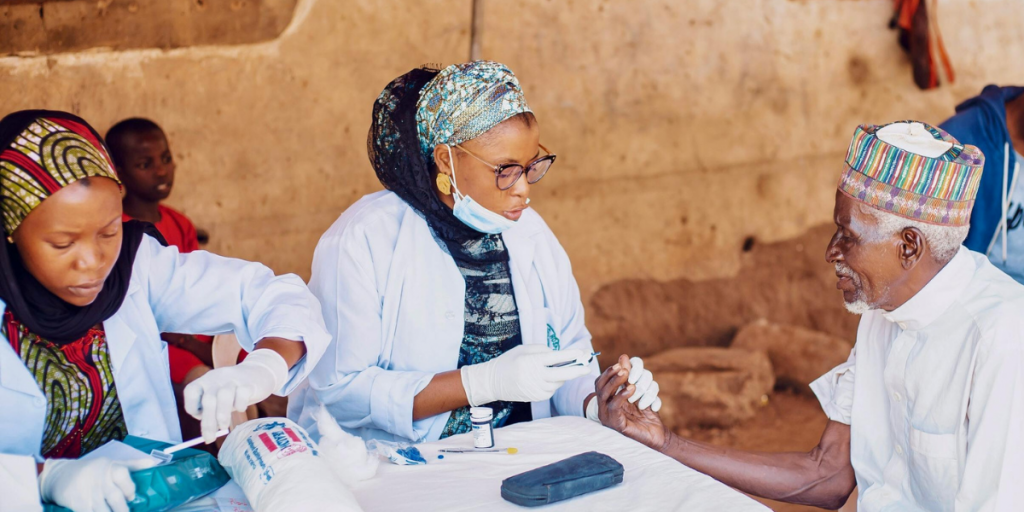
One category is essential continuity: maintaining health systems, utilities, food supply, civil-service payroll, public financial controls, and other functions whose collapse would impose immediate costs on citizens. A second category includes conditional institutional support, such as budget transparency, anti-corruption controls, local service delivery, or preparations for credible elections. A third should be treated as prohibited or presumptively high risk: projects that expand coercive surveillance, direct resources toward patronage networks, weaken independent institutions, or promote the political narrative of the transition leadership.
The distinction reflects the normative environment in which transition governments operate. The African Charter on Democracy, Elections and Governance defines coups as unconstitutional changes of government and provides for suspension and possible sanctions, while still allowing diplomatic initiatives intended to restore democracy. Engagement is therefore not a binary choice between full partnership and complete withdrawal. It can be limited, conditional, and explicitly connected to constitutional restoration.
Make Legitimacy a Design Requirement
Transition authorities often seek visible “quick wins” to demonstrate competence. Delivering electricity, reducing food storage, or stabilizing public payroll can indeed reduce immediate pressure. But performance alone does not create legitimate government.
Research on citizen engagement in fragile settings shows that legitimacy is influenced not only by whether services are delivered, but by how they are delivered. Functional grievance channels, meaningful opportunities for participation, and visible government accountability can strengthen the relationship between citizens and the state.
That means participation cannot be added as a communications exercise after a strategy is complete. It must shape the strategy itself. Consultations should reach beyond national elites to include women, young people, marginalized communities, local officials, professional associations, and groups outside the capital. Public-facing roadmaps should disclose priorities, milestones, responsible institutions, and constraints. Independent monitoring mechanisms should allow citizens to see whether commitments are being met.
The aim is not to manufacture consent for the transition. It is to create a process through which competing interests can be heard, and public decisions can be challenged.

Sequence Reforms Through a Conflict Lens
Standard transformation programs reward speed. In fragile transitions, speed without political judgment can make instability worse.
Subsidy reform, public payroll verification, security-sector restructuring, decentralization, and anti-corruption campaigns all create winners and losers. Even a technically justified decision may inflame regional inequalities, remove livelihoods, or be used selectively against political opponents. The World Bank has warned that fiscal adjustment in fragile settings must account for distributional impacts because perceptions of unfairness can trigger violence.
Every major recommendation should therefore pass a conflict-sensitivity test: Which groups gain? Which lose access, income, status, or protection? Could the reform strengthen a party to the conflict? Could implementation expose citizens, local partners, or civil servants to retaliation?
Advisers should use shorter planning cycles, scenario triggers, and reversible pilots rather than a single fixed transformation plan. IMF guidance for fragile and conflict-affected settings similarly emphasizes country-specific analysis, reform constraints, sequencing, capacity limits, and the risks of engagement. In practice, the strategy should be reviewed whenever the transition timetable changes, sanctions expand, violence spreads, or key political actors leave the process.
Protect the Public Balance Sheet
Post-coup governments often face immediate fiscal pressure. External financing may be suspended, revenue collection may weaken, security spending may rise, and capital may leave the country. At the same time, emergency procurement and opaque command structures can increase opportunities for diversion.
Financial governance should therefore be treated as a stabilization priority, not a back-office workstream. Advisers should support treasury visibility, cash controls, transparent procurement, auditable payroll systems, beneficial-ownership checks, and public reporting on exceptional expenditures. Funding for essential services may need to be ring-fenced, independently monitored, or delivered through institutions that can demonstrate operational neutrality.
The World Bank notes that fragile and conflict-affected settings frequently combine weak expenditure control, low revenue transparency, limited access to credit, inflation, capital flight, and declining trust in institutions. These risks reinforce one another. A reform program that cannot show where public money goes will struggle to earn domestic confidence or restore external partnerships.
Data itself also required protection. Transition authorities may suppress unfavorable indicators, while administrative records may be incomplete or manipulated. Consultants should triangulate official data with local surveys, market signals, satellite or geospatial evidence where appropriate, and reporting from independent institutions. Assumptions and data limitations should be made explicit.
Build for the Government That Comes Next
The final test of a post-coup engagement is whether its benefits can survive a political handover.
Programs should be housed in professional institutions rather than in temporary executive offices. Knowledge, systems, contracts, and data should remain under public ownership. Civil servants and local experts should be able to operate new processes without permanent dependence on external advisers. Reform milestones should align with a credible transition roadmap, but essential services should not be held hostage to political deadlines.
This also requires restraint. A transition period is rarely the right moment to launch every desirable reform. The priority should be capabilities that expand future choices: reliable public accounts, functioning service-delivery systems, professional administrative capacity, inclusive consultation mechanisms, and credible information. UNDP and African Union work on inclusive transitions emphasizes that durable responses must address governance failures, economic pressures, social inequality, and the meaningful participation of marginalized communities-not merely the mechanics of a return to elections.
Consultants should also define exit and handover conditions from the outset. What happens if the transition timetable is extended? Which activities pause if human-rights conditions deteriorate? Which capabilities transfer to an elected government? Clear answers protect both institutional integrity and public value.
A Different Definition of Success
In a conventional transformation, success may be measured by implementation speed, cost-savings, or new systems launched. In a post-coup transition, those measures are incomplete.
The more important questions are whether essential services remained available, whether public resources became more transparent, whether marginalized groups gained a meaningful voice, whether reforms reduced rather than redistributed conflict risk, and whether institutions became more capable of supporting constitutional government.
Strategic advisers cannot resolve the legitimacy crisis created by a coup. But they can choose whether their work narrows or widens it. The most responsible consulting approach is one that keeps the state functioning while making the return to accountable civilian rule more—not less—possible