

The Gulf’s transformation is often narrated through spectacle: new cities, global sporting events, and sovereign investments large enough to reshape entire industries. Those projects matter. But they are not strategy.
The deeper strategy is architectural. Across the Gulf Cooperation Council (GCC), governments are using national visions to redesign how they allocate capital, regulate markets, involve citizens in the economy, and connect the region to global flows of trade, talent, technology, and energy. Saudi Arabia’s Vision 2030 is the largest and most visible expression of this shift. Still, it sits alongside the UAE 2031, Qatar National Vision 2030, Oman Vision 2040, Bahrain Economic Vision 2030, and New Kuwait 2035.
Together, these programs are an ambitious effort to turn resource wealth into productive capacity before the assumptions underpinning the hydrocarbon economy materially change. The opportunity is historic. So is the execution risk.
A Regional Operating Model, Not a Collection of Projects
At their core, the Gulf visions share a common operating model. The state sets long-term priorities, sovereign institutions supply patient capital, infrastructure lowers the cost of participation, regulatory reform creates markets, and workforce policy attempts to align citizens with a more private-sector-led economy.
The targets are deliberately expensive. The UAE, for example, aims to double GDP to AED 3 trillion by 2031 and raise non-oil exports to AED 800 billion. Qatar has translated its 2030 vision into three successive national development strategies, bridging long-range ambition and medium-term implementation. Oman Vision 2040 similarly treats economic diversification, fiscal sustainability, labor markets, private investment, governance, and environmental management as interdependent priorities rather than separate policy domains.
This integration distinguishes the Gulf model. Tourism policy is also aviation, infrastructure, cultural, and labor policy. Advanced manufacturing depends on procurement, energy, pricing, logistics, investment rules, technical education, and capital. Digital transformation is not simply an IT program; it is a mechanism for making the state faster and easier for business to navigate.
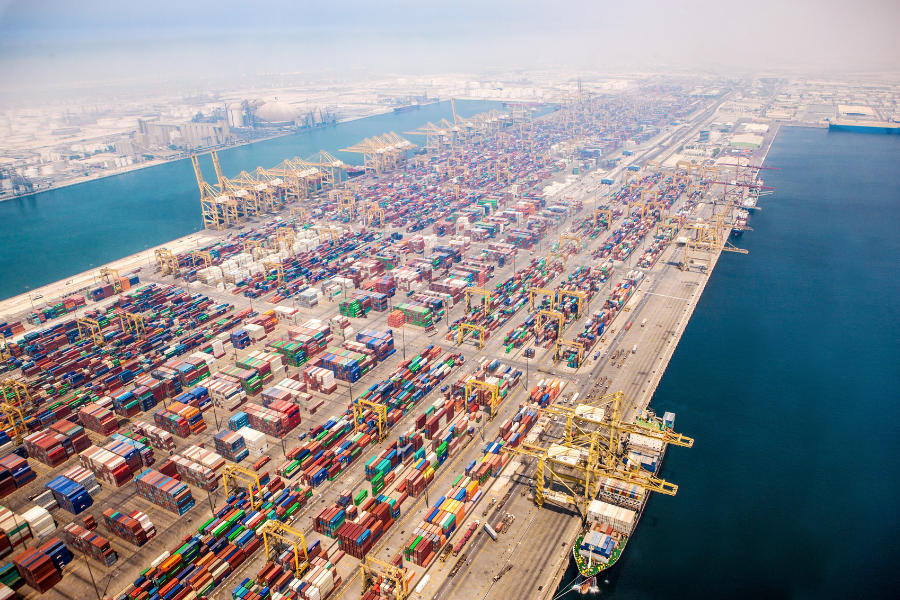 The decisive test is whether new sectors eventually generate competitive exports, gains, private investment, and tax revenue without requiring the state to remain the dominant customer.
Progress is Real, but it is Not Yet Self-Sustaining
The early results are meaningful. The World Bank reported that the GCC’s non-hydrocarbon economy expanded 3.7% in 2024, even as total regional growth reached only 1.7% amid oil-production constraints. Saudi Arabia’s 2025 Vision 2030 report states that non-oil activities rose to 55% of real GDP and that non-oil government revenue increased by 170% since 2016.
Yet diversification can be measured in several ways, and they do not always move together. An economy may produce more non-oil output while its public finances, exports, and investment cycle remain closely tied to hydrocarbons. In Saudi Arabia, oil and oil products still represented 69% of exports in 2025, while the fiscal deficit reached 5.8% of GDP, according to the IMF.
That distinction matters. Non-oil growth financed by oil revenue is an important bridge, but it is not the end state. The decisive test is whether new sectors eventually generate competitive exports, productivity gains, private investment, and tax revenue without requiring the state to remain the dominant customer, financier, and risk absorber.
The Architecture’s Central Tensions
Sovereign capital must catalyze markets, not crowd them out
Sovereign wealth gives Gulf governments an advantage few transformation programs possess: the ability to invest through long development cycles and absorb early-stage risk. It can establish demand, attract global partners, localize supply chains, and make new markets investable.
But the same advantage can blur the line between market creation and substitution. When public entities are simultaneously investor, owner, regulator, purchaser, and sponsor, private firms may grow around state spending rather than independent demand. The next phase requires clear exit logic, transparent performance measures, stronger competition policy, and financing that moves risk progressively onto private capital.
Capital expenditure must become productive capacity
Large projects are visible evidence of momentum, but spending volume is a poor proxy for economic additionality. The World Bank estimates that a one-percentage-point increase in GCC government investment produces only a modest increase in potential non-hydrocarbon output, underscoring that project selection and spending quality matter more than scale alone.
Every major investment should be tested against the system it leaves behind. Does a logistics hub increase tradable activity? Does a technology produce intellectual property and exportable services, or mainly imported capability? The strategic unit of analysis cannot remain the asset. It must become the ecosystem.

Citizens must shift into private-sector roles to reduce reliance on public employment.
Workforce policy must shift from localization to productivity
The visions depend on citizens moving into private-sector roles at a scale the traditional public employment model cannot sustain. This is not simply a matter of quotas. Public-private wage gaps, education quality, career expectations, expatriate labor rules, management capability, and the availability of high-value work all shape the outcome.
Oman’s experience illustrates the broader challenge. IMF analysis estimates that the country must create more than 220,000 jobs for nationals by 2032, while wage differences and labor-market segmentation continue to make many private-sector roles less attractive. Localization can change hiring behavior, but durable transformation requires wages to reflect productivity, training to match sector needs, and firms to see national talent as capability rather than a compliance cost.
National ambition needs regional scale
Gulf states are targeting many of the same sectors: tourism, logistics, finance, technology, advanced manufacturing, clean energy, and global events. Competition can accelerate reform, but it can also produce duplicated infrastructure, fragmented standards, and bidding wars for the same investors and specialists.
Deeper GCC integration would change the economics of these strategies. Progress on the common market, customs systems, cross-border services, professional recognition, aviation, and rail would allow firms to treat the Gulf as a scalable platform rather than six adjacent markets. GCC leaders advanced several of these mechanisms in 2025, including a customs data exchange platform, service-trade implementation measures, a regional civil aviation authority, and a railway agreement. Execution will determine whether regional integration becomes an economic multiplier or remains an unfinished layer of architecture.
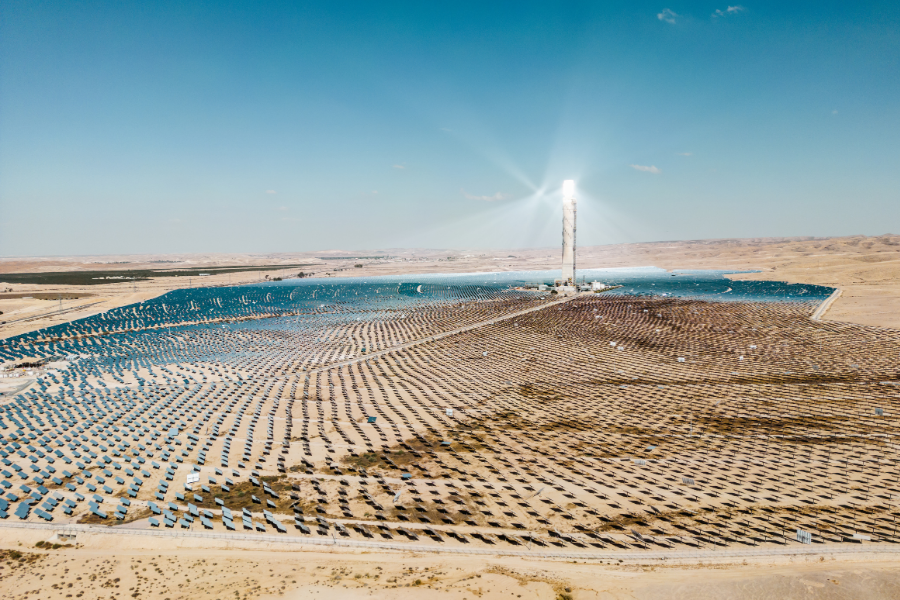
Climate resilience is not an external risk to Vision 2030; it’s a design condition.
Resilience must be designed into growth
The Gulf sits at the intersection of climate exposure, water scarcity, maritime chokepoints, and geopolitical competition. These are not external risks to the vision; they are design conditions. The IMF’s 2026 assessment of Saudi Arabia showed how disruptions around the Strait of Hormuz could affect trade, confidence, and non-oil activity, while diversified logistics infrastructure helped limit the damage.
Climate resilience requires the same systems approach. Water, power, food, cities, and industry cannot be planned independently in a region where desalination links water security directly to energy supply. The World Bank has emphasized wastewater reuse, lower-energy desalination, aquifer management, and coordinated water-energy governance as strategic Gulf capabilities.
What Leaders Should Prioritize Beyond 2030
Measure additionality, not activity. Dashboards should distinguish jobs from productive jobs, investment announcements from deployed capital, and non-oil output from non-oil activity that remains dependent on pubic spending. Export competitiveness, firm survival, productivity, and private reinvestment are harder metrics, but they reveal whether transformation is becoming self-propelling.
Institutionalize portfolio discipline. National visions need mechanisms to stop, sequence, merge, or redesign initiatives as assumptions change. Recalibration should be treated as evidence of strategic maturity, not failure. Capital is most powerful when leaders preserve the option to redirect it.
Build markets around anchor projects. Procurement, open standards, supplier development, financing, and competition rules should be designed before construction begins. The objective is not simply to complete an asset but to create room for firms that can eventually compete without privileged access to the state.
Treat talent as infrastructure. Education and localization policies should be linked to real occupational demand, employer incentives, and mobility across the GCC. The region’s ability to retain global expertise while expanding meaningful citizen participation will be one of the clearest determinants of long-term productivity.
Use regional integration as a force multiplier. Common standards, interoperable digital systems, transport connections, and mutual recognition can give national vision access to a larger market. Strategic specialization would also reduce the risk that every state builds smaller versions of the same economy.
The Real Horizon is Institutional
The year 2030 was never a finish line. It was a device for concentrating attention, capital, and administrative energy. The more consequential horizon is the point at which transformation no longer depends on exceptional mobilization: when institutions can adapt, firms can scale, workers can move into productive careers, and new sectors can survive a weaker oil cycle.
The Gulf has already demonstrated that the state can move markets at extraordinary speed. The challenge beyond 2030 is to prove that the architecture it has built can generate momentum of its own.